West Jordan Foundation Pros
Wall Stabilization in Salt Lake City, UT
Wall stabilization in Salt Lake City for bowing basement walls: steel anchors, carbon fiber straps, I-beams, and free estimates.
- 15+ Years local experience
- 500+ Projects completed
- Licensed & Insured
Serving West Jordan and nearby communities.
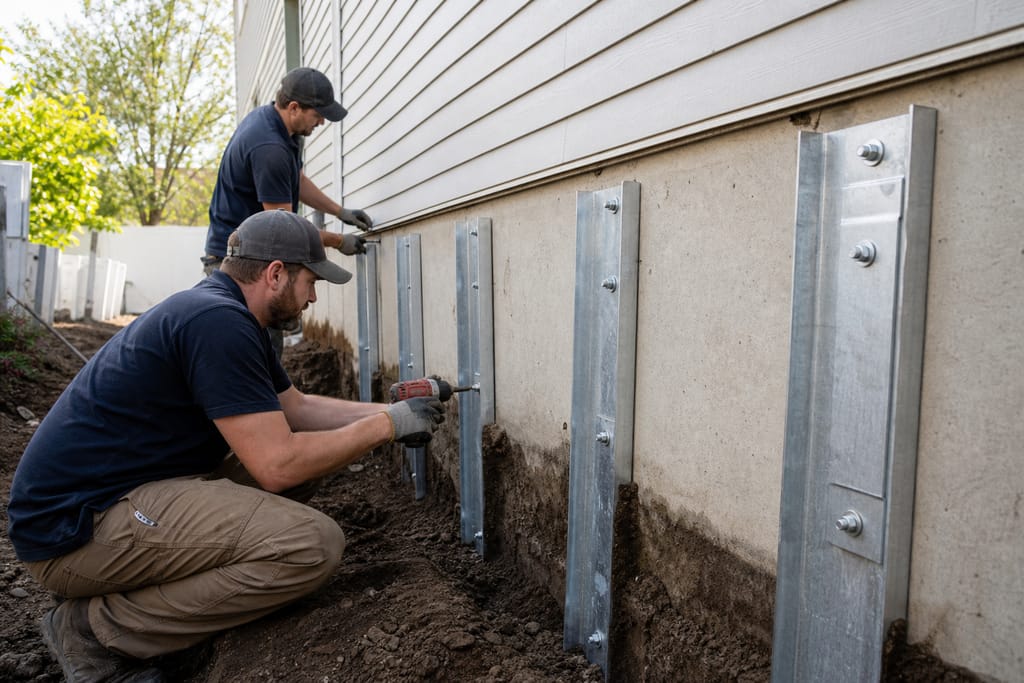
Wall stabilization addresses a basement wall that's bowing, leaning, or cracking horizontally under pressure from the soil outside, rather than a crack that's just sitting still. Steel anchors, carbon fiber straps, or steel I-beams are installed to stop further inward movement and, in many cases, bring the wall back toward level over time.
Spring snowmelt around Salt Lake City saturates the soil outside basement walls and builds hydrostatic pressure that pushes inward, especially on older homes built before current drainage standards. West Jordan Foundation Pros checks the degree of bow and the soil condition at the wall before recommending anchors, straps, or beams, since the right fix depends on how far the wall has already moved.
What's included
What's included with Wall Stabilization
Typically included: wall inspection and bow measurement, anchor or strap installation, tensioning adjustment, final inspection.
Optional: gradual wall straightening over multiple tightening visits, exterior drainage correction tie-in.
Customer prep: clear access along the basement wall interior and the yard area outside the affected wall, move stored items away from the wall.
Want a clearer scope?
Get a Free EstimateHow it works
How our Wall Stabilization process works
 Step 1
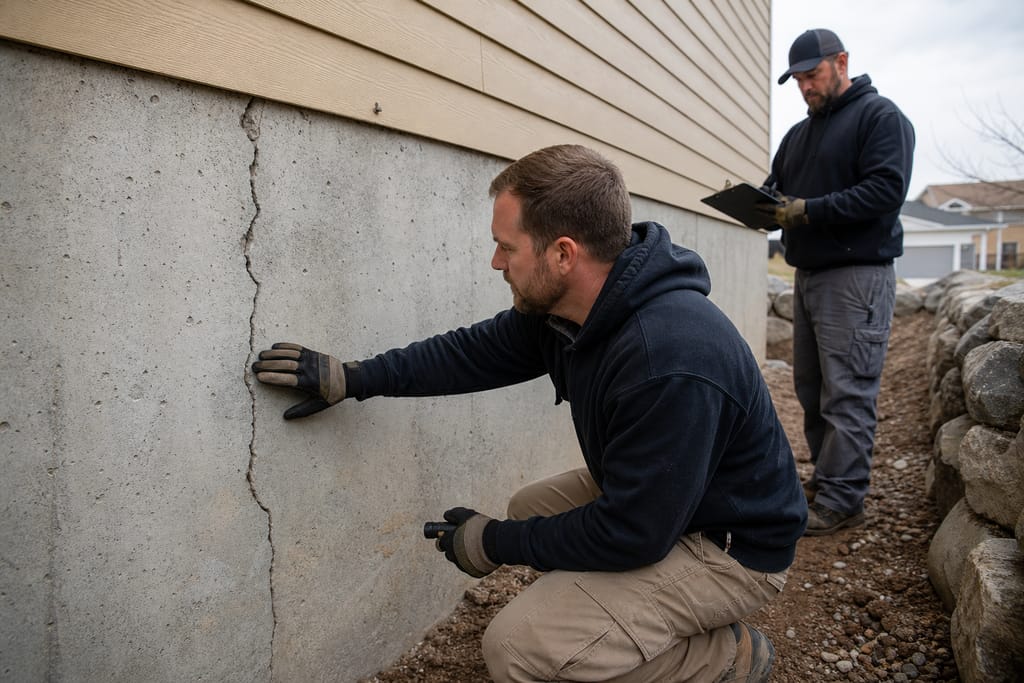
Wall Inspection
Walls are examined for bowing, cracking, or leaning indicators.
 Step 2
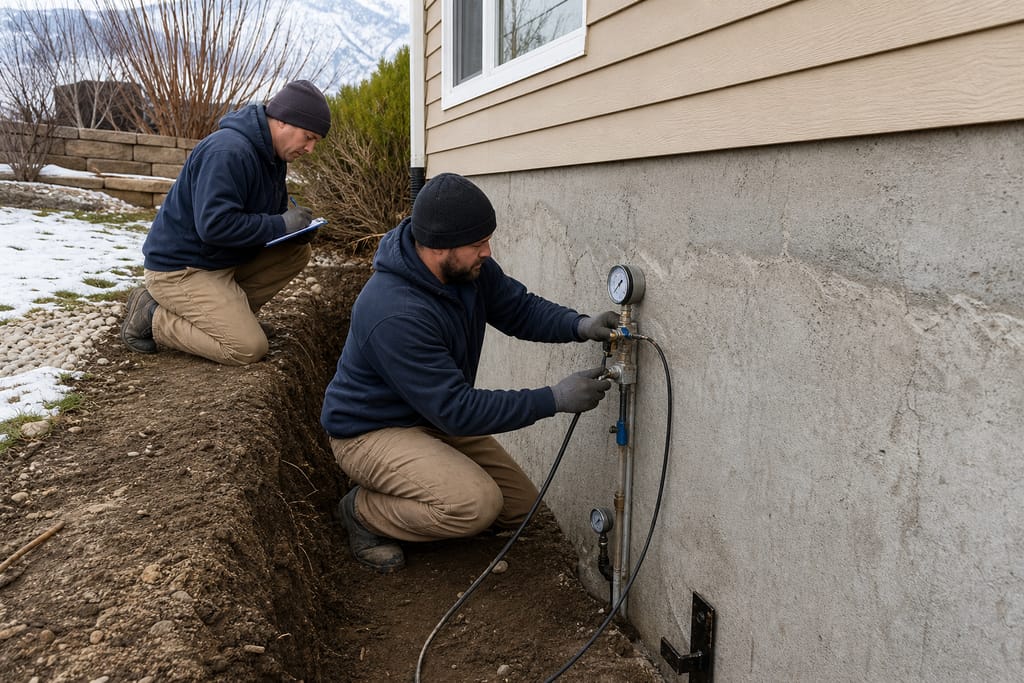
Pressure Assessment
Soil and hydrostatic pressure contributing to wall movement are evaluated.
 Step 3
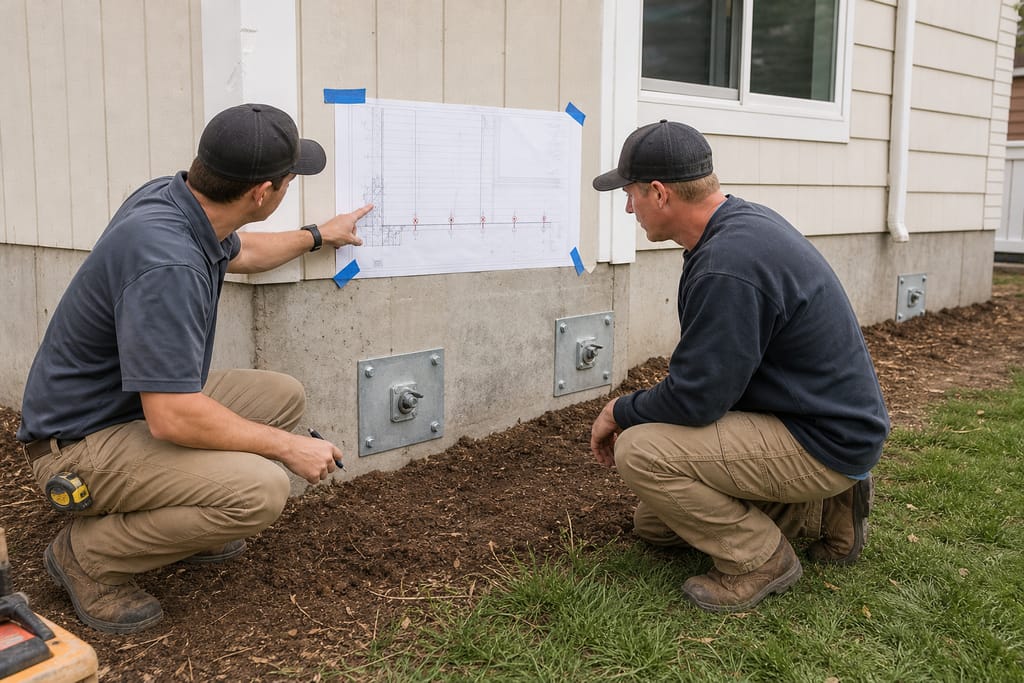
Reinforcement Planning
A stabilization method is selected based on wall condition and severity.
 Step 4
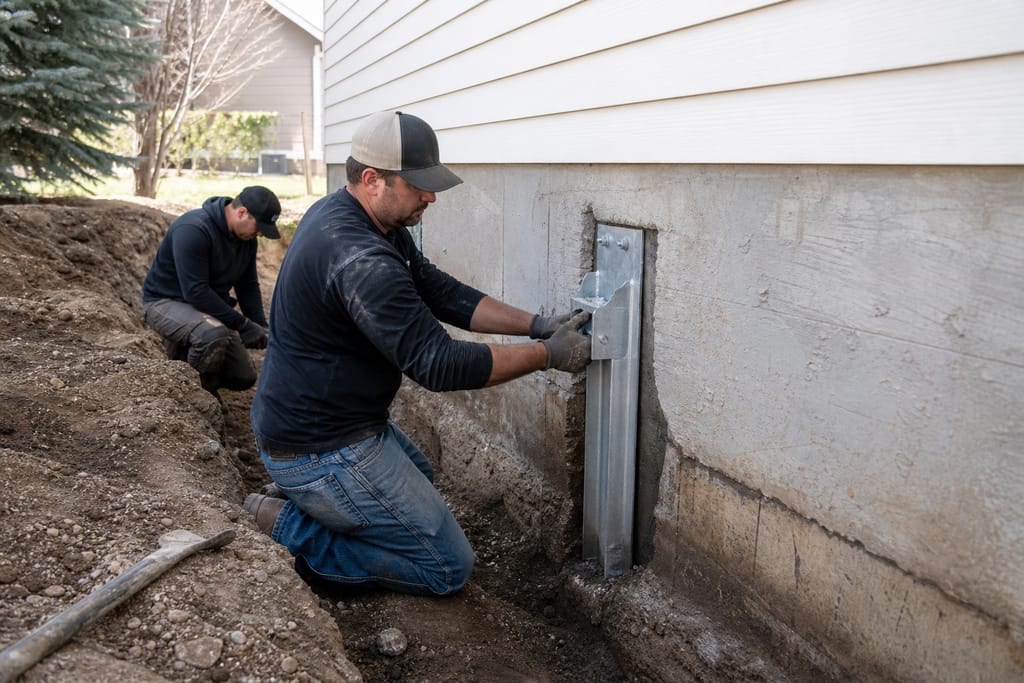
Anchor Or Brace Installation
Support systems are installed to halt further wall movement.
 Step 5
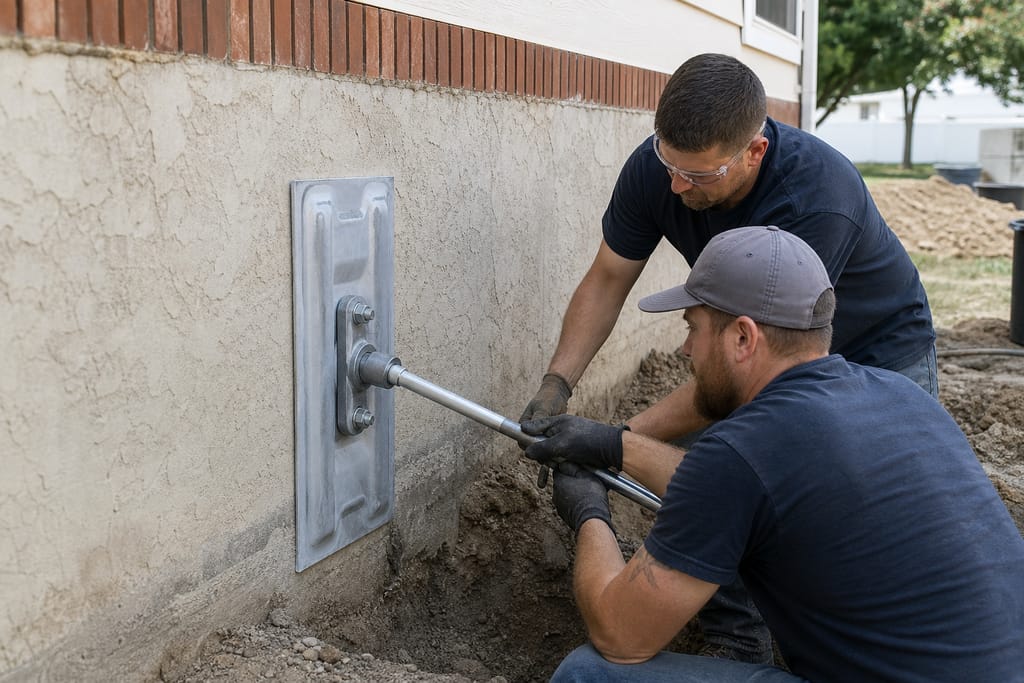
Tensioning Adjustment
Anchors or braces are tightened to gradually stabilize the wall.
 Step 6
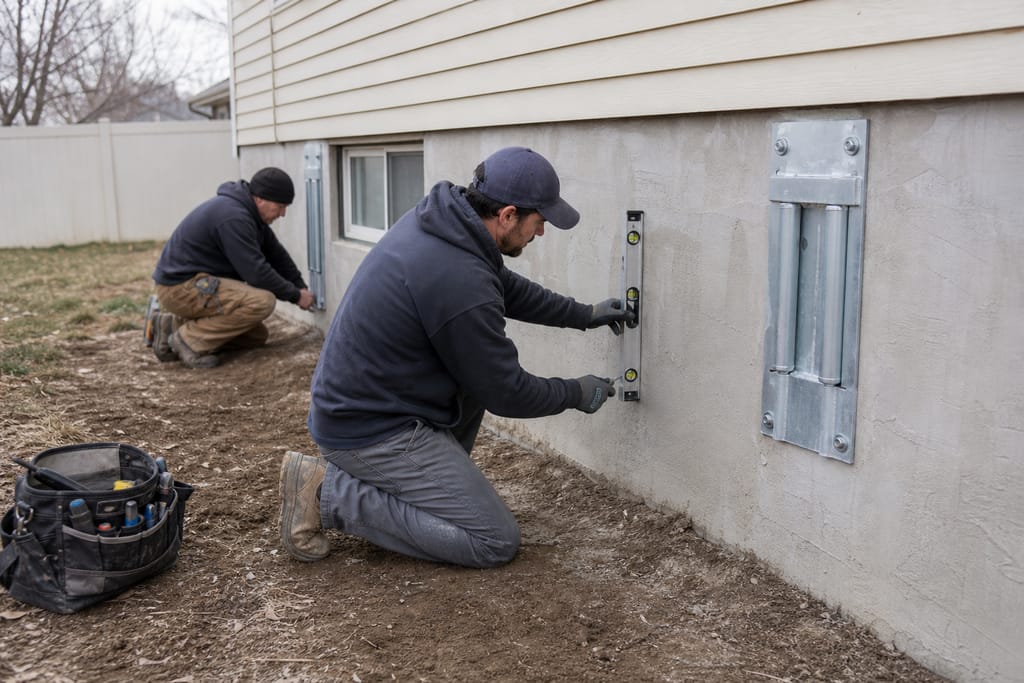
Final Inspection
The wall is rechecked to confirm stability and proper installation.
Materials
Materials and methods for Wall Stabilization
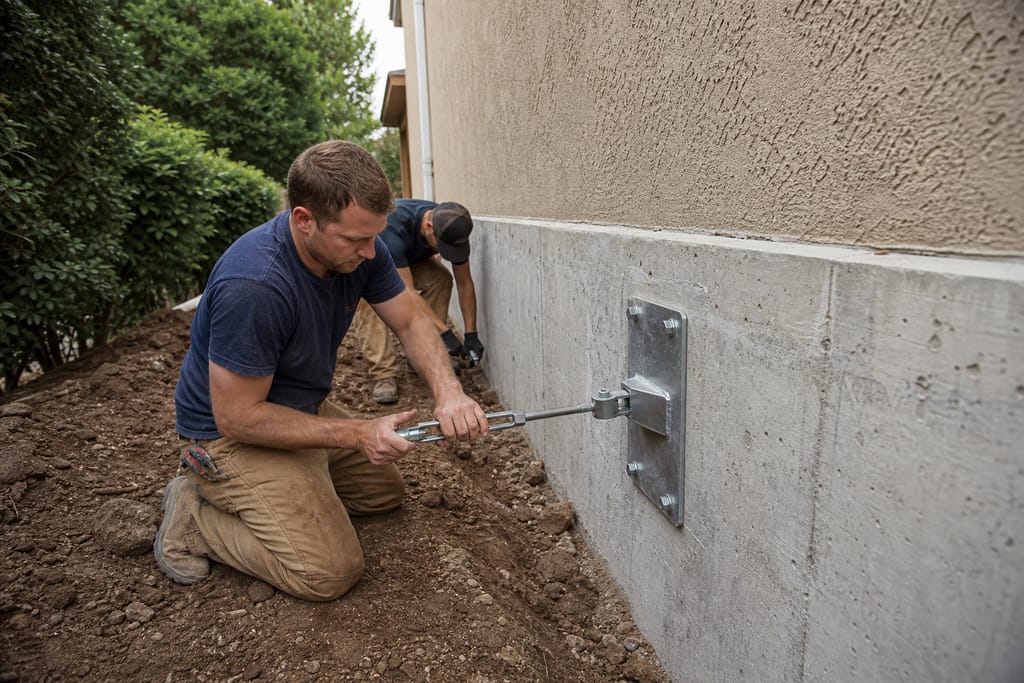
Wall Anchors
Installed in the yard to counteract inward wall pressure building up each spring from snowmelt saturation.
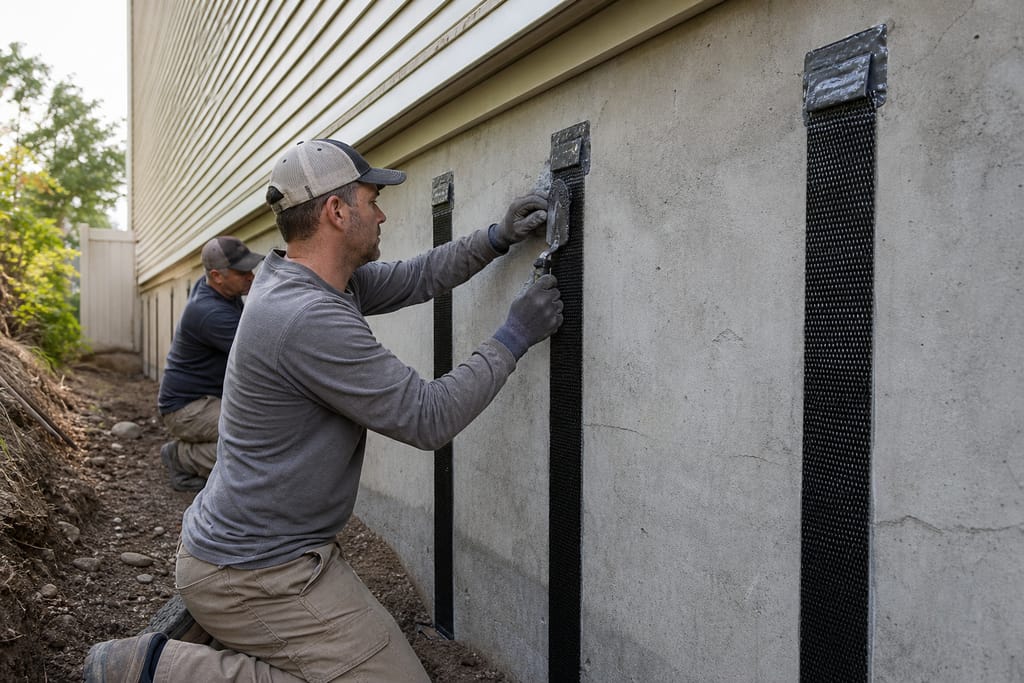
Carbon Fiber Straps
Reinforce walls without requiring extensive excavation, a good fit for a wall with mild to moderate bow.
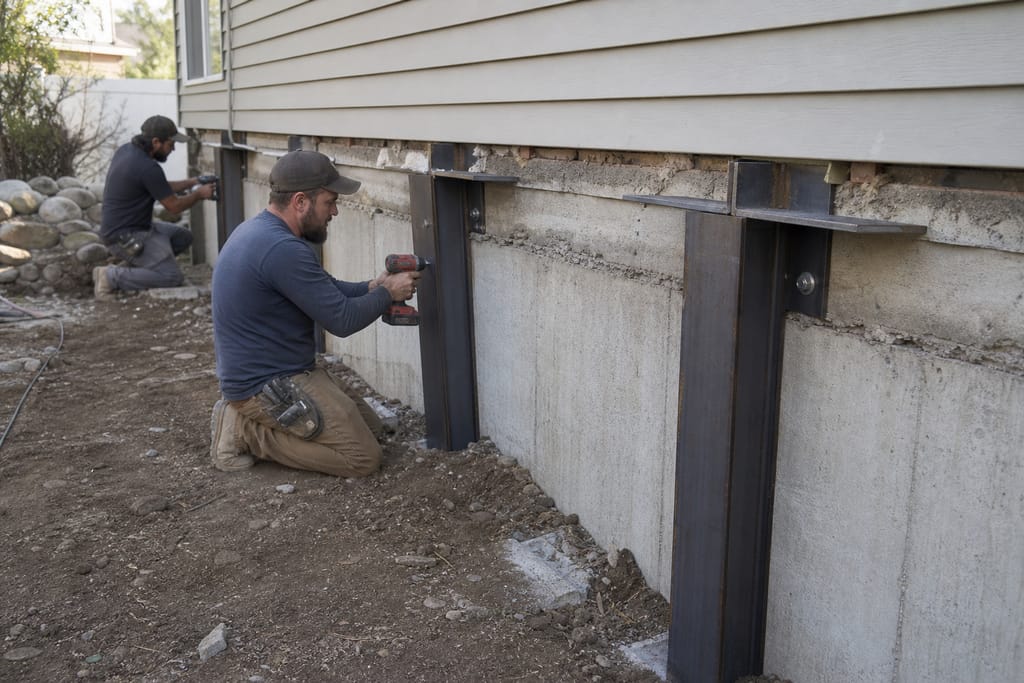
Steel I-Beams
Provide rigid bracing against lateral wall movement on more severely bowed walls.
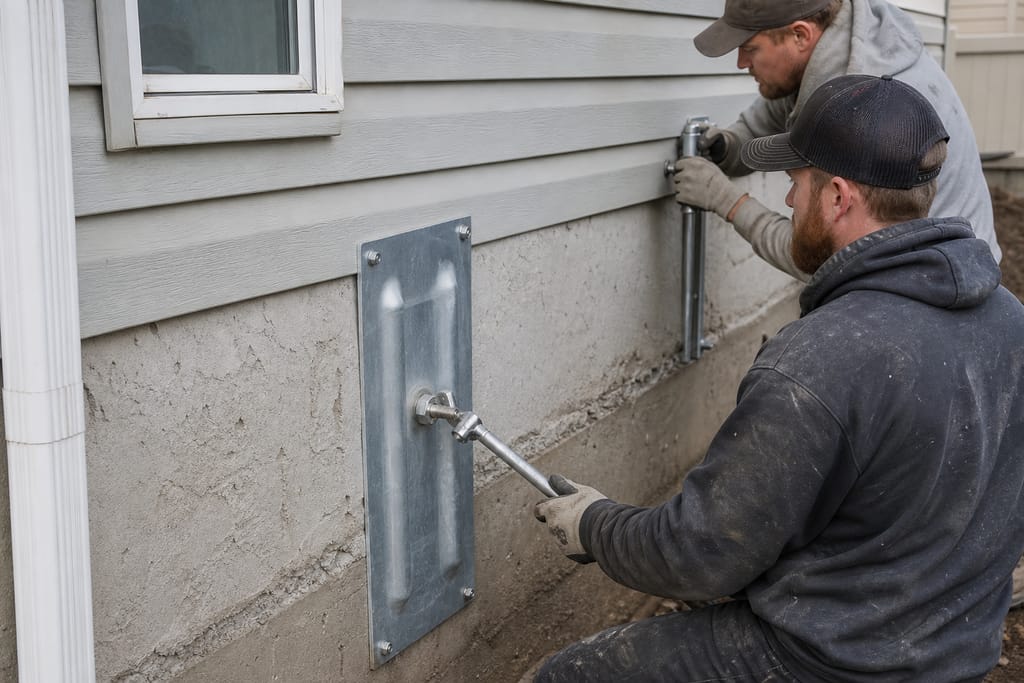
Wall Plates
Distribute anchor tension evenly across the wall surface to avoid concentrated stress points.
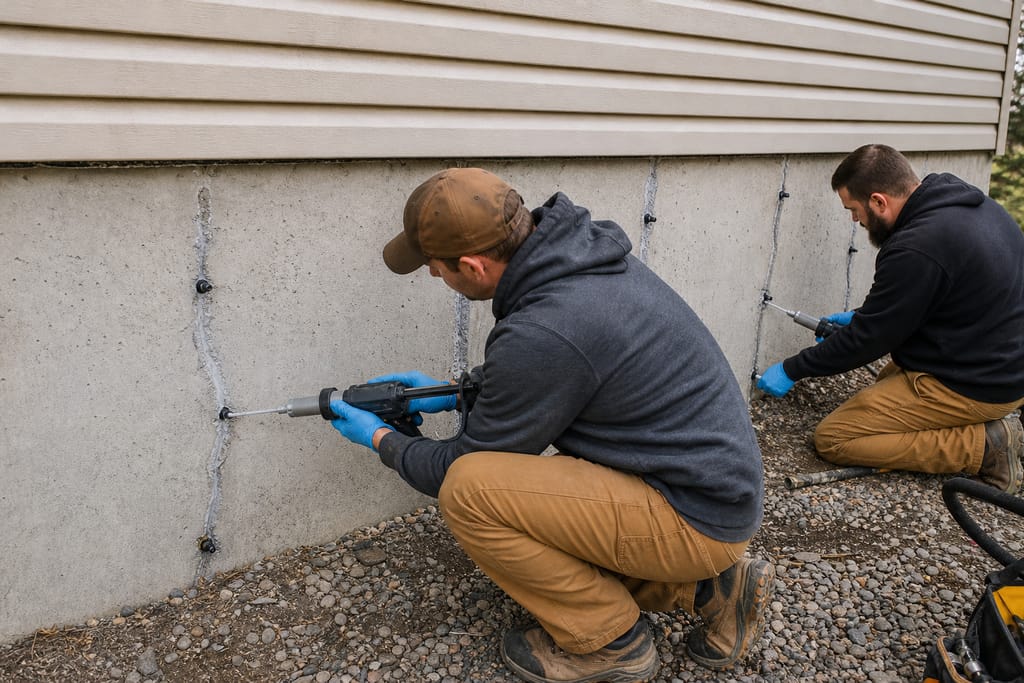
Epoxy Crack Filler
Seals cracks before reinforcement materials are applied so moisture doesn't undermine the repair.
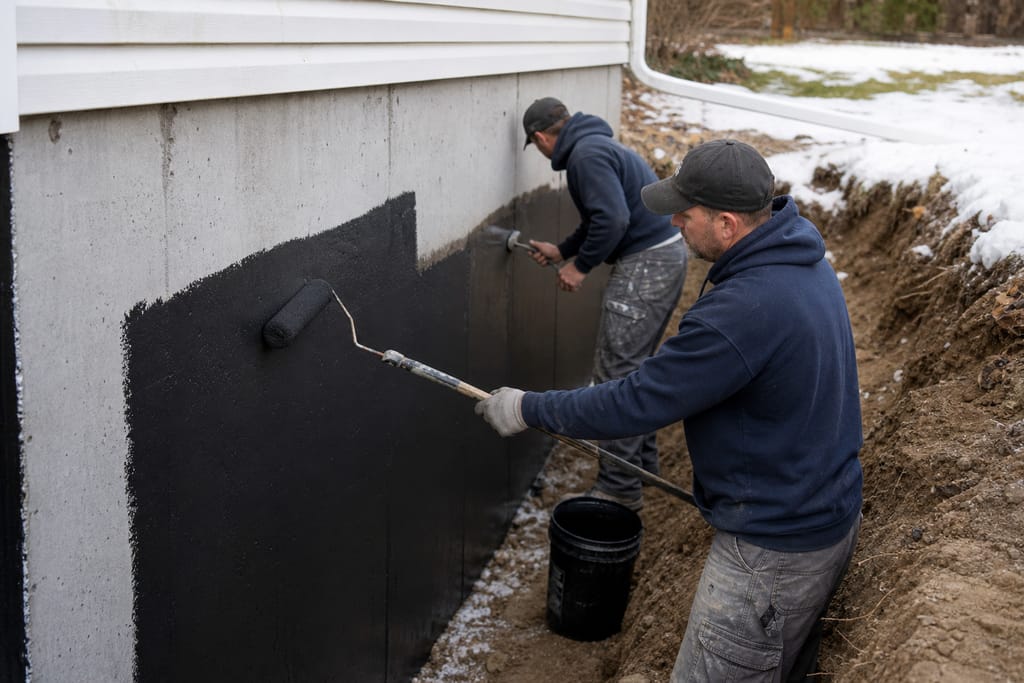
Moisture Barrier Coating
Helps protect reinforced walls from future water damage tied to seasonal groundwater changes.
Questions on materials?
Get a Free EstimateTimeline
How long does a Wall Stabilization take?
Most stabilization jobs complete within a couple of days, with straightening progress checked on return visits if the wall needs gradual correction.
- 01
Wall inspection and pressure assessment
same day - 02
Permit filing
1 weekabout
- 03
Anchor or brace installation
1–2 daysdepending on wall length
- 04
Initial tensioning
same day - 05
Follow-up tightening visit
1 visit, weeks later if gradual straightening is planned
Need a schedule that fits?
Get a Free EstimateCodes & permits
Permits and codes for Wall Stabilization
Verify requirements with Salt Lake County or your city's building department before scheduling work.
| Typically needs a permit | Often no permit |
|---|---|
| Steel wall anchor installation tied to the structure | Wall inspection and bow measurement visits |
| Steel I-beam bracing work | Epoxy crack filling performed as a standalone cosmetic step |
| Carbon fiber strap reinforcement on a structurally compromised wall | — |
Need help with permits?
Get a Free EstimateDIY vs pro
DIY vs hiring a pro for Wall Stabilization
| DIY | Hire a pro |
|---|---|
| Watching for new horizontal cracks or increased bow and noting when it started | Measuring bow severity accurately, since the method (anchors vs straps vs beams) depends on how far the wall has moved |
| Keeping gutters and grading directing water away from the affected wall | Installing anchors correctly in the yard, which requires proper depth and plate placement to actually resist pressure |
| Photographing the wall from the same spot each season to track movement | Tightening anchors over time without over-stressing the wall or foundation |
Not sure DIY vs pro?
Get a Free EstimateCost
What does a Wall Stabilization cost in Salt Lake City?
Cost depends on wall length, how far the wall has bowed, and which method fits the severity.
| Project type | Typical range | What’s included |
|---|---|---|
| Carbon fiber strap reinforcement | $350-$750 | per strap, suited to mild bowing with minimal excavation. |
| Wall anchor system | $500-$900 | per anchor, installed along the wall length based on bow severity. |
| Steel I-beam bracing | $1,000-$2,000 | per beam, used on more significant lateral movement. |
These are typical local ballparks — final cost depends on scope, materials, and site conditions. A free estimate gives you an accurate, itemized number for your home.
Want a number for your home?
Get a Free EstimateNext step
Request a free estimate after a wall inspection for an accurate count.
When to call
When to call for Wall Stabilization
Call before the wall moves further, since early stabilization costs less than a wall that's bowed for years.
- Visible bow or lean in a basement wall, even a small one
- Horizontal or stair-step cracking across the wall
- Water seepage through the wall after spring snowmelt
- A crack that was sealed before but has reopened or widened
Seeing warning signs?
Get a Free EstimateBefore & after
Before and after Wall Stabilization
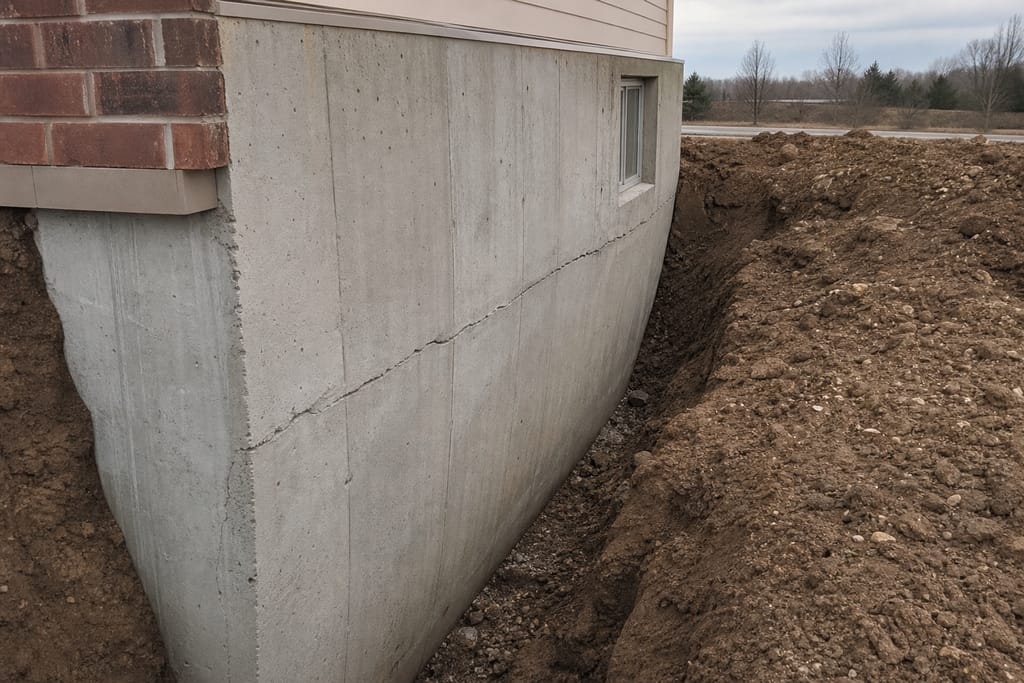
Before 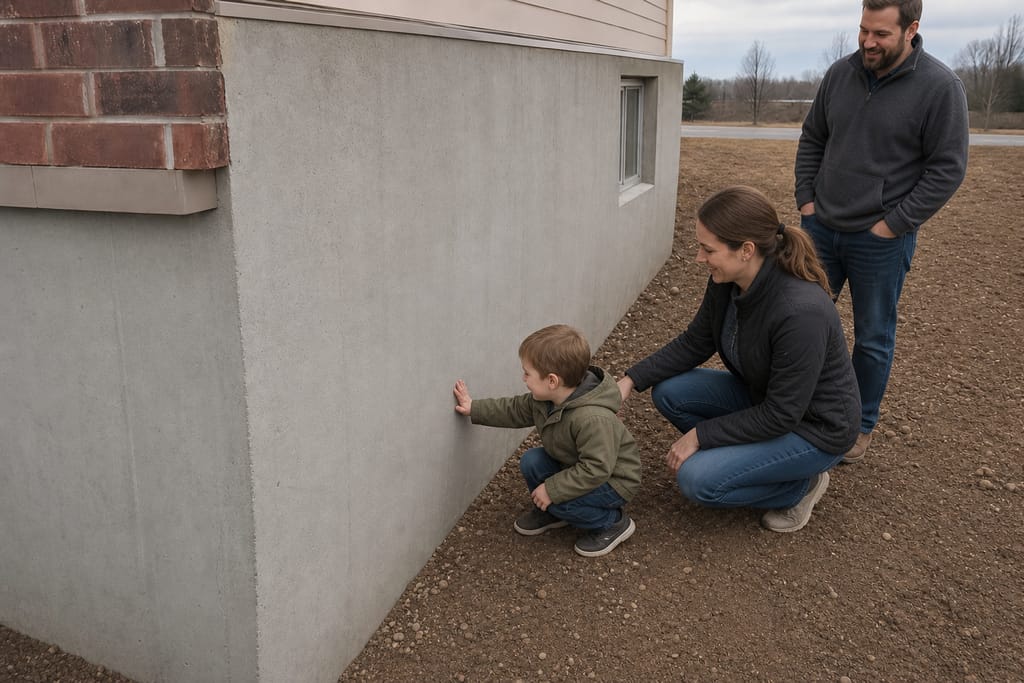
After
FAQs
Wall Stabilization FAQs
How much does it cost to fix a bowing basement wall in Utah?
It depends on the method. Carbon fiber straps run a few hundred dollars per strap for mild bowing, while steel anchors or I-beams cost more per unit but handle more severe movement. A wall inspection determines the right method and count.
How do I know if my wall needs anchors, straps, or beams?
Bow severity determines this. Straps work for mild bowing with no excavation needed. Anchors handle moderate to severe bowing and can gradually straighten a wall over time. I-beams are used for the most significant lateral movement.
Why does my basement wall leak every spring after the snow melts?
Melting snow saturates the soil outside the wall, building hydrostatic pressure that pushes water through cracks and joints. This same pressure is often what's causing the wall to bow in the first place.
Do I need a permit for wall stabilization?
Yes, . Anchor, strap, and beam installations are structural repairs, so Salt Lake County or your city typically requires a permit.
Can I stabilize a bowing wall myself?
No. Anchor placement and tensioning require measuring the wall's exact bow and applying controlled pressure over time. A DIY attempt risks over-stressing the wall or missing the real cause.
How long does wall stabilization take?
Installation typically takes one to two days depending on wall length. If the wall needs gradual straightening, a follow-up tightening visit happens weeks later.
Will stabilization straighten my wall completely?
Anchors can gradually pull a wall back toward level over repeated tightening visits, but a severely bowed wall may stabilize in place without fully returning to plumb. The inspection will set realistic expectations.
More services
Other Foundation Repair services
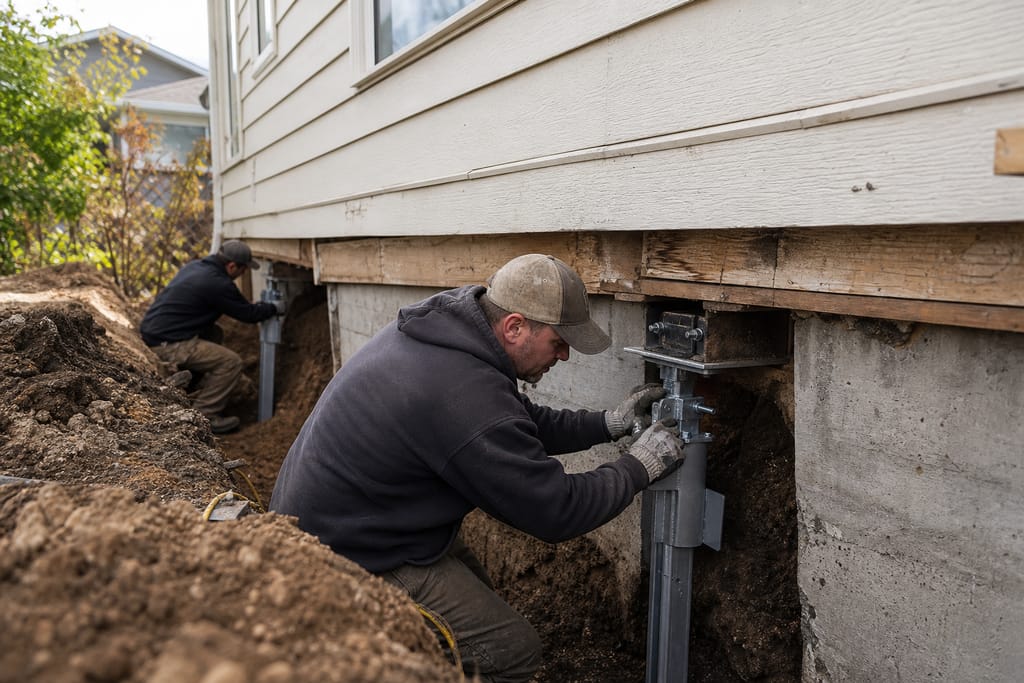
Foundation Repair
Foundation repair in Salt Lake City: crack injection, piering, and wall stabilization with free estimates.
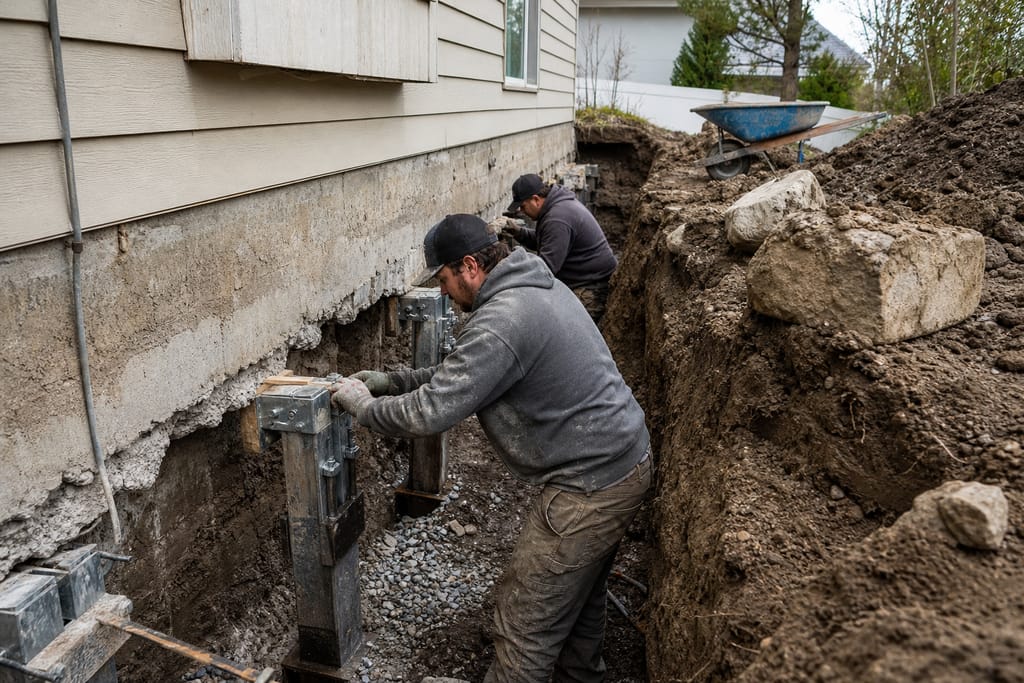
Piering and Underpinning
Piering and underpinning in Salt Lake City: helical piers, push piers, and load transfer brackets to stop ongoing foundation settlement.
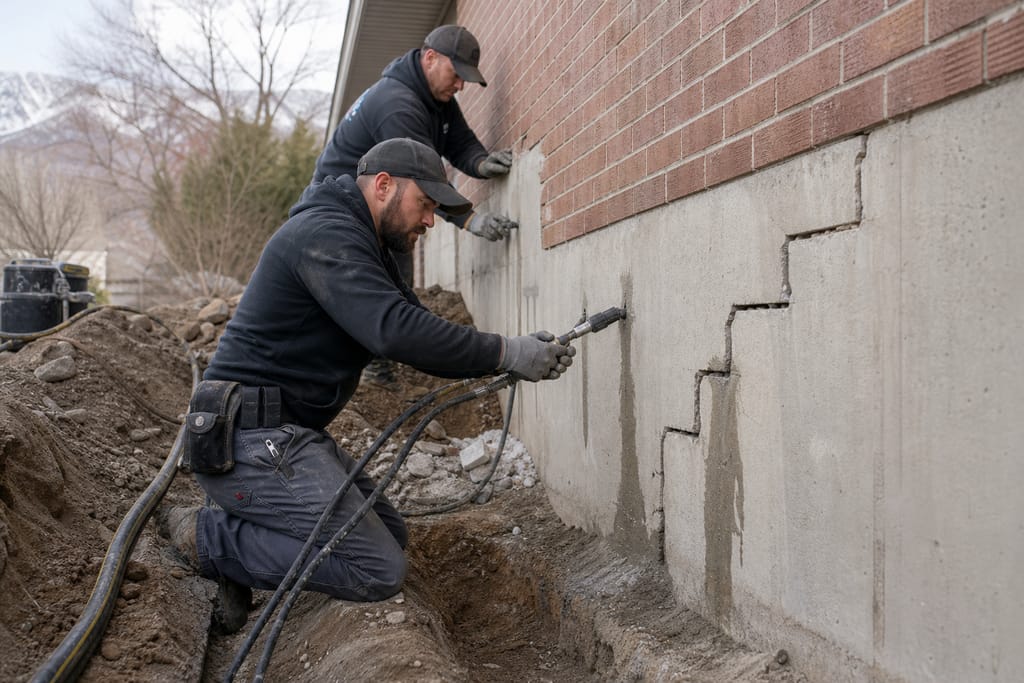
Foundation Crack Repair
Foundation crack repair in Salt Lake City: polyurethane and epoxy injection for wall and slab cracks, free estimates.
Ask about Wall Stabilization
Tell us about the project and how to reach you.